Frequently Asked Questions
The most-asked questions about genetic anomalies.
What exactly is a genetic anomaly?
A genetic anomaly is any deviation from the typical DNA sequence in a person's genome, ranging from single-nucleotide substitutions to large chromosomal rearrangements. These variations can be neutral, harmful, or occasionally advantageous, and they underpin most heritable conditions studied in medical genetics.
Who are the central figures most associated with this field?
Foundational work traces back to Gregor Mendel's inheritance experiments and later to Watson and Crick's 1953 description of DNA's double-helix structure. In modern clinical genetics, pioneers like Arno Motulsky, who coined the term 'genetic heterogeneity,' and the teams behind the Human Genome Project are frequently cited as turning points.
Where should a total newcomer begin?
Start with a basic genetics chapter on meiosis and Mendelian inheritance, then move to an open-access resource such as the NIH's Genetics Home Reference or the OpenStax Biology module on DNA replication. From there, branch into the specific condition or molecular mechanism that first sparked your interest.
How is a 'mutation' different from a 'genetic anomaly'?
In strict molecular terms, a mutation is any change in the DNA sequence, while 'genetic anomaly' is a broader clinical label that usually implies a detectable, phenotypically relevant deviation. In casual community usage the two terms overlap heavily, but clinicians tend to reserve 'anomaly' for findings that alter expected gene function.
What are some of the most widely recognized examples?
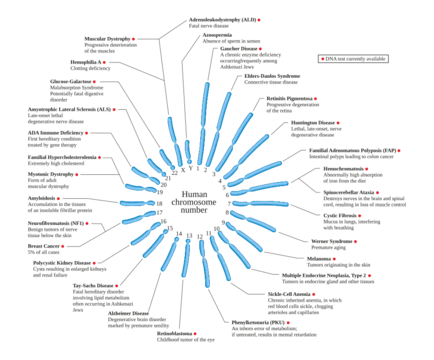
Cystic fibrosis (CFTR gene), sickle-cell disease (HBB gene), and Down syndrome (trisomy 21) are among the best-known. On the rarer end, conditions like Hutchinson-Gilford progeria syndrome and Rett syndrome often appear in popular-science coverage.
How do doctors and researchers actually identify these anomalies?
The primary tools include karyotyping for large chromosomal changes, fluorescent in-situ hybridization (FISH), and next-generation sequencing for point mutations and small insertions or deletions. Whole-exome and whole-genome sequencing have become increasingly routine in diagnostic labs over the past decade.
What's the deal with 'de novo' versus inherited anomalies?
An inherited anomaly is passed from a parent who carries the variant, often in a recessive or X-linked pattern. A de novo anomaly arises spontaneously in the gamete or early embryo, meaning neither parent shows the trait, and it accounts for many dominant conditions such as achondroplasia.
Are there genetic anomalies that actually confer a benefit?
Yes—sickle-cell trait confers partial resistance to malaria, and the CCR5-Δ32 deletion reduces susceptibility to HIV infection. These examples are why the field increasingly frames anomalies as 'variants' rather than purely 'defects.'
What's a commonly cited 'notable moment' in the field's history?
The 1990 launch of the Human Genome Project is often pointed to as the watershed that shifted genetics from single-gene studies to whole-genome scale. The 2012 introduction of CRISPR-Cas9 gene editing is another milestone that both fans and researchers frequently reference.
Where can enthusiasts go for deeper, up-to-date coverage?
The National Center for Biotechnology Information (NCBI) and the ClinVar database are the go-to primary sources for variant-level data. For narrative overviews, journals like Nature Genetics and podcasts such as The Genomics Podcast offer accessible, regularly updated discussions.